The Scholars

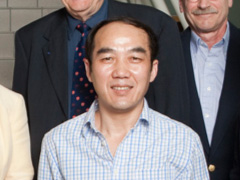
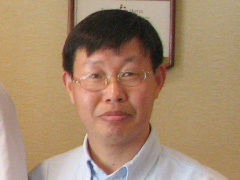
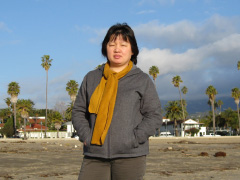
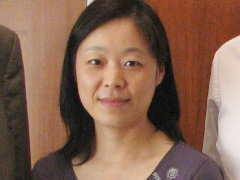
Two or three individuals are chosen biennially for the Tang Cornell-China Scholars Program. Below are those who have been chosen since the program's inception in the year 2000.
  • Wang Tao
  • Zhao Shuhong
  • Liu Ronghou
  • Hu Zhihong
  • Chen Gongyou
  • Lu Yahai
  • Xu Jingjuan
  • He Yuqing
  • Zhao Ruqian
  • Chen Jinfeng
  • Qu Li-Jia
  • Li Kui
  • Deng Zixin
Wang Tao
Professor, Chengdu Institute of Biology, Chinese Academy of Sciences
SUMMARY OF MY WORK
My research interests focus on the improvement and development of wheat varieties that can be adapted to the environments of the South-west China through conventional plant breeding and molecular genetic methods. In particular, my research objectives are to develop new stripe-rust-resistant wheat varieties with high yields and high grain quality. These genetic materials will be provided to local farmers in order to maintain sustainable wheat production in this region. In addition, my research also involves the identification and characterization of wheat genes responsible for wheat end-use quality, and the development of molecular markers that can be used for wheat MAS (Molecular Assisted Selection) breeding program. Currently, our research team is focusing on developing superior waxy (amylose-free) wheat varieties.
IMPACTS IN CHINA
About a quarter of the total land area of China is in the South-west region. Wheat production in this area has been facing many challenges, including low yields, low nutritional qualities, and wide spread stripe rust diseases. Tibet faces the most challenges in this area: the protein content of the Tibetan wheat is often too low to be used in any baked or steamed products. Therefore, it is urgent to develop new wheat varieties for the South-west China, especially for Tibet, with high yields, high quality and stripe rust resistance. Thus, our research can potentially make contributions to food security in China.

As a Tang Scholar, I will conduct two projects in Dr. Leon Kochian's lab: 1) Genetic mapping of the loci that determine the cereal mineral ion content in wheat through genetics and ionomics approaches (in collaboration with Dr. Mark Sorrells); 2) Evaluation and characterization of aluminum (Al) tolerance for wheat germplasm collected from the South-west China region. Aluminum (Al) is ubiquitous in soils and when solubilized at pH values below 5.0, is highly phytotoxic as Al3+. Approximately 30% of the world's total land area and over 50% of the world's potentially arable lands are acidic. A large portion of the acid soils occur in the South-west China. Therefore, Al toxicity is one of the major constrains that limit wheat production in the South-west China. In collaboration with Dr. Leon Kochian's group, we will understand the impacts of high Al content in acid soils on wheat yields and grain quality for the Tibetan germplasm collection and to identify wheat varieties from this collection that are tolerant to Al stress. Our goals are to dissect the genetic mechanism underlying Al tolerance in the selected Tibetan wheat lines. Although a major Al tolerance mechanism has been identified as a TaALMT1-mediated Al-activated root malate exudation system in common wheat, due to the unique nature of our Tibetan wheat germplasm which was collected from an isolated region, our studies might result in identifying new Al tolerance mechanisms in wheat.
PUBLICATIONS
For details on publications and projects see the scholar's website. http://sourcedb.cib.cas.cn/zw/rck/200908/t20090803_2296882.html
http://www.cib.cas.cn/jgsz/kyxt/nyswjsyjzx/nyyjtz/wttz/200908/t20090820_2427696.html
Zhao Shuhong
Professor, Director, Key Lab of Agricultural Animal Genetics, Breeding, and Reproduction of Ministry of Education; Vice Dean, College of Animal Science and Biotechnology, Huazhong (Central China) Agricultural University, Wuhan, 430070 PR China
Summary of my work
In pig production and research, the aim is to develop pigs that grow fast, are healthy and eat less feed. In order to reach this goal, traditional breeding methods based on quantitative genetics play an important role. However, traditional methods have limits in selection accuracy, and the improvement of some important traits in every generation is rather low. In addition, the generation interval is long, resulting in a relatively high cost.

As head of one of the biggest teams in porcine molecular genetics in China, my research has spanned a number of areas. I have conducted pioneering work in porcine functional genomics tool development, such the design and protocol for the first generation of oligo arrays. I have also developed the software and platform for a pig miRNA study. I also conducted the work on identification and function studies of porcine genes that control muscle growth. I have proposed to do fetal muscle transcriptional profiling between lean and Chinese fatty breeds to identify genes related to muscle growth based on the fact that the muscle fiber number is a key factor affecting meat yield and it is fixed before birth. I conducted transcriptome analysis to screen genes and miRNAs related to fetal muscle growth, and conducted gene function studies on the cell and individual level. A number of genes have been detected for SNPs among different breeds and were found to be associated with meat production traits. We also developed a whole genome microRNA prediction software package and published the first paper on miRNA transcriptome and possible pathways in porcine fetal muscle development. Our team also confirmed target genes and pathways for several miRNAs.

To address the conflict of decreased disease resistance under high lean growth, in one of my projects, I developed an F2 population to map important genes and chromosome regions for IFNA production and other immune response traits and markers for porcine disease resistance. Also, we performed the transcriptional profiling work of a porcine lung and spleen infected by Haemophilus parasuis (HPS), and found those bacteria can cause many genes involved in apoptosis, inflammation, and antibody processing. Our work indicates that the MYD88(myeloid differentiation primary response gene 88)and dependent TLR2(Toll-like Receptor 2)signaling plays a crucial role in initiating host IRs following HPS infection. CEBPB(Ccaat/enhancer binding protein beta)is the core transcription factor in this signaling that connects to a wide range of cascades like inflammatory responses and acute phase reactions. Gene networks for respiratory disease, genetic disorder, arthritis, etc., have been identified too. Canonical pathway analysis indicates that HPS employs several strategies for immune evasion, including inhibiting leukocyte migrations, phagocytosis, and communications between immune cells in innate IR and activation of T/B lymphocytes in adaptive IR.
Impacts in China
By combining modern molecular theory and traditional methods, pig breeding progress can be accelerated and selection costs can be decreased. In the future, molecular biology techniques can help breeders decide which piglet can be used as breeding stock at birth by genotype. Through collaboration with breeding companies, we are trying to use our research results in breeding programs, and our research has contributed to the progress of porcine molecular biology and its application in breeding practice. The long-term goal of our research is to improve production efficiency. I am also recognized internationally in my area. I was invited as a Co-Chair of the world's largest plant and animal genome (PAG) conference organizing committee (2009-2011), and I am a standing committee member of functional genomics in the International Society of Animal Genetics. I'm an editor and reviewer for a number of international and national scientific journals.
Awards
National Outstanding Young Woman Scientist, 2011
National Youth Scientific Award, 2011
Award of the National Outstanding Youth Science Foundation, 2010
Award as “Provincial Excellent Woman Teacher Prize” by Government of Hubei Province (2009)
Award as “Hundreds, thousands talented people of China” of Chinese Ministry of Human resource (2006)
Award as “Provincial Significant Contribution Young Expert” by Government of Hubei Province (2009)
Award as “New Century Excellent Talent” by Education Ministry of
China (2005)
2nd class award of “Hubei Provincial Nature Science Prize” (2006) 2nd class award “Nature Science Prize Education Ministry of China” (2007)
3rd class award of “Scientific foundation of Liang Shengqiao” of Hubei province (2008)
Excellent teacher award of “National Challenge Cup” on supervising undergraduate students conducting scientific research (2007)
Publications
For details on publications and projects please see the scholar's website.
http://my.hzau.edu.cn/Article/ShowArticle.asp?ArticleID=60
Liu Ronghou
Professor, Shanghai, JiaoTong University
Summary of my work
1) “Research on key technology of biomass fast pyrolysis based on improving bio-oil property,” supported by the Ministry of Science and Technology of China through 863 Program, coordinated by Professor Ronghou Liu, from October 2008—November 2010 (0.74 Million Yuan). At Cornell, my main work is research and development of pyrolysis for biochar production. Biochar properties are analyzed and biochar is utilized as soil conditioner.
2) “Kinetic study of biomass pyrolysis based on the pyrolysis temperature distribution,” (50776059), supported by the National Natural Science Foundation of China, coordinated by Professor Ronghou Liu, from January 2008—December 2010. (0.36 Million Yuan). This project is also closely related to my work in Cornell. Kinetic studies are carried out.
3) “Research and demonstration of key technology of agricultural waste recycling utilization,” supported by Science and Technology Commission of Shanghai Municipality, coordinated by Professor Ronghou Liu, from October 2008—September 2011 (0.93 Million Yuan). This project includes biomass gasification and biogas and is closely related to my work at Cornell. A small-scale gasification unit will be built in Shanghai, China. In addition, some research on biogas production is being carried out. A UASB reactor has been designed and will be manufactured soon.
Impacts in China
My three projects related to biomass pyrolysis and agricultural waste recycling utilization will utilize agricultural residue and produce energy from biomass. In addition, we cooperate with the UK and have applied for a proposal to conduct life cycle assessment on biomass pyrolysis and gasification that will be supported by both the UK and Chinese government.
Publications
For details on publications and projects see the scholar's website.
http://www.agri.sjtu.edu.cn/cn/szdw/lrhnei.asp
Hu Zhihong
Professor, Wuhan Institute of Virology, Chinese Academy of Sciences
Summary of my work
My current research projects are largely related to an insect virus named Helicoverpa armigera nucleopolyhedrovirus (HearNPV). HearNPV was first identified from diseased cotton bollworm in 1975 in Hubei province, China. It is a viral pathogen specific to the cotton bollworm and was registered as the first viral pesticide in China. My projects focus on understanding the mechanisms of virus infection, which will help to develop viral pesticides with better insecticidal properties for applications in the field. While at Cornell, I focused on understanding how viral fusion protein travels in the midgut cells of insects. When a virus infects an insect, the primary infection starts from the midgut. Midgut infection is very important for killing an insect, however, very little is known about the mechanism of the midgut infection. We try to use fluorescent-tagged technology to follow viral infection in the midgut.
Impacts in China
China is the largest cotton producing and consuming country with 6 million hectares of cotton fields. Pests cause 15-20% reduction in the yield of cotton annually, and, normally, pest control is accomplished with chemical pesticides. It is estimated that 40% of chemical pesticides in China are used on cotton fields. Application of chemical pesticides has caused environmental pollution, insect-resistance and is poisonous to farmers and livestock. Therefore, environmental friendly biological control agents are needed. HearNPV is highly specific to cotton bollworm, and has been registered as the first viral pesticide in China since 1993. Now, about 100,000 hectares of cotton are treated with HearNPV annually. My projects have helped the utilization of HearNPVs in the field by providing technical support for the production and application of the viral pesticide, as well as improving the insecticidal properties of the viral pesticide.
Publications
I have had several publications since my selection as a Tang scholar, but the work I have been doing at Cornell has not been published yet.
For details on publications and projects see the scholar's website.
http://sourcedb.whiov.cas.cn/zw/rck/200907/t20090718_2100081.html
Chen Gongyou
Professor, Shanghai Jiaotong University. (When selected as a Tang Scholar, Dr. Chen was at Nanjing Agricultural University through 2008)
Summary of my work
After the completion of my Tang Scholarship at Cornell University, I continue to focus my research on the Xanthomonas oryzae (a pathogenic bacterium to rice). Currently, I have three projects on “molecular determinants of pathogenicity of X. oryzae in rice”. X. oryzae causes severe bacterial diseases in rice in China. My research group is trying to develop novel control strategies to reduce the damage caused by plant diseases. These projects are tightly related to the research I participated in when in Prof. Alan Collmer’s lab. We share our research materials and molecular tools to strengthen our research capacity. Recently, my lab identified an important gene from Arabidopsis, Nicotiana benthamiana and rice, which is involved in elicitation of the hypersensitive response (HR). The HR is a programmed cell death associated with immunity activation in plants. We are the first to identify such a gene, and we are working with Dr. Collmer to gain more evidence on the function of this gene.
Impacts in China
My research is founded on basic life sciences. New conceptual knowledge, novel control measures for plant diseases, and new genes to trigger plant immunity from the X. oryzae-rice pathosystem will have a direct impact on the advancement of agriculture in China. For example, we are trying to educate Chinese farmers on how to distribute and keep disease-resistant rice cultivars to avoid infection by the dominant races of X. orzae, because the pathogen has the ability to generate new virulence genes to overcome resistance genes in rice. We are trying to develop transgenic rice with novel genes that can trigger resistance in rice.
New knowledge in molecular plant pathology that I gained at Cornell University enables me to give good lectures to both undergraduate and graduate students at SJTU. Being a Tang Scholar established a strong tie between Cornell University and SJTU, especially between my mentor, Prof Collmer, and me. We are working on our shared research results in the near future and will continue our collaboration in the future. In May 2008, I invited Dr. Collmer to visit my laboratories both at SJTU and NJAU, and he was more than happy to give lectures and research suggestions to my postgraduates that facilitated my students’ research progress. We are looking forward to Dr. Collmer visiting my lab at SJTU and NJAU in upcoming years.
Publications
For details on publications and projects see the scholar's website.
http://www.agri.sjtu.edu.cn/teacher/shi_view.asp?id=58
Lu Yahai
Professor of Soil Microbiology, China Agricultural University
Summary of my work
Currently, I have the following three projects which are related to my activity at Cornell: 1) Resolve the microbiological mechanisms for methane emissions fromChinese paddy fields; (2) Identify the key microbial processes to improve the efficiency of biogas production from agricultural wastes in anaerobic bioreactors; (3) Explore the possibility of paddy fields as sediment microbial fuel cell to produce electricity and reduce methane emissions.
Impacts in China
My projects related to resolving the microbiological mechanisms for methane emissions fromChinese paddy fields are mainly basic research, but are directly related to rural China, especially as they advance agriculture. The knowledge produced could be very useful for the development of practical technologies in the future.
Publications
For details on publications and projects see the scholar's website.
http://www.cau.edu.cn/zihuan/ms.php?ID=39
Xu Jingjuan
Professor, Nanjing University
Summary of my work
(1) Study of micro-nanofluidic integrated system for bioanalysis: This project focuses on the study of mass/charge transfer behaviors in micro-nano channels and inestablishing theoretical models, such as the modulation and control of the mass transfer in micro/nano fluidic systems as a result of changing the characteristics of micro/nano channel surfaces and performing highly efficient accumulation techniques for biomacromolecules. It also addresses the combination of electrophoresis separation with highly sensitive electrochemical methods to fabricate a micro/nano fluidic platform with the integration of injection, accumulation, reaction, and separation and detection units.
(2) Study of highly sensitive semi-conductor nanocrystal ECL (electrogenerated chemiluminescence) biosensors: The research on this topic is in the beginning stages because there have been a series of problems in the process of fabricating highly sensitive biosensors. To address these problems, we are proposing that this project be based on our previously established ECL energy transfer methods. They focus on studying the energy transfer mechanisms between the labels (such as gold nanoparticles and magnetic nanoparticles) and semiconductor NCs, establishing highly sensitive ECL detection methods for biological macromolecules; further developing energy fitting ECL active materials; full exploring the mechanism of the exciton-Plasmon interaction, the effect of magnetic field on the ECL of magnetic semiconductor NCs and the application possibility of magnetic nanoparticles as biolabels in the ECL energy transfer technique. It is anticipated that this approach will yield a new detection technique and platform for bioscience research.
Both projects closely relate to my work at Cornell in analytical biotechnology, where chemical and biological techniques are combined and integrated into innovative and engineered devices for the detection of biological and chemical substances in the environment, food, and medicine.
Impacts in China
Our projects are focused on using nanoscale gold membrane electrodes for constructing sensors for the determination of metal ions in soils and water. In China, large areas of soil and water have been contaminated with metal ions due to increasing urbanization and industrialization. Generally, soil and water samples are collected in the field and then analyzed in a laboratory. Developing portable and sensitive sensors for quick in-field determination of metal ions is urgently needed. We have successfully developed As(III) and Pb2+ sensors, based on nanoscale gold modified electrode, with a high sensitivity of 0.1µM for Pb2+ and 0.04 ppb for As(III).
Publications
For details on publications and projects see the scholar's website.
http://chem.nju.edu.cn/staff/staff.asp?iname=%D0%EC%BE%B2%BE%EA
He Yuqing
The College of Life Science and Technology, National Key Laboratory of Crop Genetic Improvement, National Center of Crop Molecular Breeding, Nation Center of Plant Gene Research (Wuhan), Huazhong Agricultural University, Wuhan
Summary of my work
Gene pyramiding to improve hybrid rice in China: This project seeks to improve the quality, yield, and resistance to pests and diseases. For the last 10 years, we sought to develop a pest and disease resistant hybrid rice by stacking multiple genes in transgenic rice to increase rice production in China.
Genetic mapping and map-based cloning of rice genes that control grain quality:
This project is to localize quality traits in rice, such as appearance, cooking, taste, and nutrition. Numerous major QTL (quantitative trait locus), such as grain length, width and thickiness, chalkiness rates, and protein content, have been identified.
The Tang scholarship support for my study at Cornell University was very useful for our research at Huazhong Agricultural University. My visit at Cornell enabled me to learn the molecular marker technology and helped do better research in China.
Impacts in China
My major work has been to improve hybrid rice for farmers in China. Green super-hybrid rice is our objective: rice that requires fewer chemicals (because of inherent resistance to pest and diseases), requires less fertilizer (because of highly efficient fertilizer absorption), and requires less water (because of drought tolerance), has good quality, and is more productive. When our hybrid rice is released for field production in China, it will benefit farmers and have a very positive effect on the environment.
Publications
For details on publications and projects see the scholar's website.
http://lst.hzau.edu.cn/doc/%E4%BD%95%E4%BA%88%E5%8D%BF.doc
Zhao Ruqian
Professor, Nanjing Agricultural University; Director of the Laboratory of Animal Physiology and Biochemistry of the Ministry of Agriculture, China
Summary of my work
I list the four ongoing projects below, all of which are related to my work in Professor Paul Soloway’s Nutritional Sciences lab on epigenetics. The first and the third are basically for academic exchanges and international cooperation. The first is supported by Cornell, and the other by the Ministry of Agriculture of China. These two grants will jointly fund Dr. Soloway’s visit to China. One or two students/young staff from my group will stay at Cornell this year. The aim of the exchange is to learn epigenetic technologies developed in Dr. Soloway’s lab for our studies on domestic animals, i.e. pigs (project 4) and chickens (project 3). 1. 2009-2010. “Where Nature Meets Nurture: Exploring the interplay between genetics and environment in pig—an important agricultural animal and model for human physiology,” supported by the Jeffrey Sean Lehman Fund for Scholarly Exchange with China, Cornell University. 2. 2010-2013. “Protein metabolism in Yellow-feather broiler chickens: Molecular mechanisms and nutritional manipulation,”supported by NSFC-Guangdong Joint Fund. 3. 2010. “Improving meat quality via metabolic programming in domestic animals,” “948” program supported by the Ministry of Agriculture of China, 2010-S14. 4. 2009-2010. “Identification and characterization of breed- and tissue-specific factors (cis- and trans-) involved in the regulation of GR expression in the pig,” supported by Ministry of Agriculture of China, (2009ZX08009-138B).
Impacts in China
Currently the projects I am working on are mostly basic research that have no direct impact on the advancement of agriculture in rural China. However, my research relates closely to the protection and exploitation of Chinese animal genetic resource, for instance, local breeds of chicken and pig. Animal husbandry in China faces great challenges and has a lot of problems, including the extinction of indigenous breeds, poor animal health and welfare, poor product quality, and compromised food safety. The western style of highly industrialized animal production does not seem to be applicable in China, especially rural China. Farmers lack the basic knowledge regarding the production of local breeds to meet the requirements of local consumers while maintaining animal health and welfare.
Publications
For details on publications and projects see the scholar's website.
http://www.njau.edu.cn/yxsz/dyi/_private/teachers/jiaoshi-zhaoruqian.htm
Chen Jinfeng
Professor and member of the Academic Committee of Nanjing Agricultural University, Nanjing, China
Summary of my work
Current projects involve Cucurbit genetics and breeding. While at Cornell, we conducted disease resistance tests on cucurbit varieties developed in China.
Impacts in China
New cucumber cultivars are being marketed by a Chinese seed company called Jiangsu Seeds.
Publications
For details on publications and projects see the scholar's website.
http://yyxy.njau.edu.cn:8010/html/jgsz/viewteacher.asp?id=39
Qu Li-Jia
Professor, College of Life Sciences, Peking University, China; Associate Director, National Laboratory of Protein Engineering and Plant Genetic Engineering; Associate Director, Peking-Yale Joint Center for Plant Molecular Genetics and AgroBiotechnology
Summary of my work
Although my research interest is mainly focused on basic science, I did some work on generating pathogen- and drought-tolerant transgenic plants (including Arabidopsis and rice) in collaboration with Dr. Haiyang Wang, my host at the Boyce Thompson Institute, Cornell.
Impacts in China
Pathogen- and drought-tolerant transgenic plants have been generated in my lab. The plants will have a direct impact on the advancement of agriculture in China when they come into use, since China is an agriculture country and loss of yield due to pathogens and drought is severe every year.
Awards
2006 Excellence Youth Grant, NSFC.
2007 China Youth Science and Technology Award.
2008 Changjiang Scholar, MOE.
Publications
For details on publications and projects see the scholar's website.
http://www.bio.pku.edu.cn/teachinfo/Biographical/qulj.htm
http://www.bio.pku.edu.cn/english/faculty/qulj/
Li Kui
Professor of Gene and Cell Engineering at the Institute of Animal Science, Chinese Academy of Agricultural Sciences, Beijing, China
Summary of my work
Since leaving Cornell, I have continued my research in animal genetics. Over the past five years, my research group has identified a series of genes related to various genetic traits and diseases of swine. In addition, my group works on genetic engineering of swine.
Impacts in China
We have collaborated with a pig stud farm in Tongcheng County in Hubei Province, one of the national impoverished counties in central China, where an eminent Chinese indigenous pig breed called Tongcheng Pig exists. We have analyzed the genetic diversity within various Chinese indigenous and foreign breeds, and the results were published in a cover story of the Journal of Heredity. Based on these studies, we have developed a commercial crossbreed with Tongcheng Pigs and foreign breeds to improve pork production and quality. The new improved pig line, called “Eqing-1” has been pushed to the market using a trademark designation. As a result of the crossbreed popularization encouraged by the local government, local live pig production has reached about 1,000,000 pigs per year. Through this research we have dramatically promoted regional rural development.
As a powerful tool for livestock breeding, molecular genetic markers and related genes have been widely explored for more than two decades. Therefore, our team cloned and characterized about 115 swine genes; 20 of them associated with swine economic traits were confirmed by using our resource family. All the research was first done in pigs so that we obtained a number of patents listed in Selected Publications and Patents. Moreover, our results were cited about 12 times by Food and Agriculture Organization (FAO) in a couple of documents. To study and improve pork quantity and quality traits, we have developed several types of genetically modified pigs over recent years. As expected, the pork was largely improved when modified genes were inserted into the pig genome. However, there is still much work needed to determine whether transgenic pork is safe and how to reduce the cost of production.
Publications
For details on publications and projects see the scholar's website.
http://www.iascaas.net.cn/person/JA20060825/iass091103.shtml
Deng Zixin
Professor and Head, Laboratory of Microbial Metabolism, Ministry of Education; Dean, School of Life Sciences & Biotechnology, Shanghai Jiaotong University
Summary of my work
Together with my collaborators, I have developed efficient gene finding systems from organisms that producing important antibiotics including those in the polyene, polyether and aminoglycoside classes with medical, agricultural and veterinary applications. The established systems enabled us to identify biosynthesis pathways of the antibiotics. The information obtained is used for production of antibiotics and novel compounds by metabolic engineering or combinatorial biosynthesis, and may potentially be used for engineering plants against fungal/insect attacks. These studies were initiated to exploit the genetic resources in China. A major subject of this important field is genetics of the biosynthesis of antifungal antibiotics in the bacteria Streptomyces. There is an urgent need to increase the production and to discover new antifungal compounds for applications in agriculture and medicine. We have been successful in making use of known unique microbial resources in China. We made a great effort to develop Streptomyces strains that produce important antifungal compounds. Our original research with international collaborations in gene identifications and genetic manipulations led to the improved production of existing drugs and compounds with desired specific activities as industrial materials or novel drug candidates.
We also worked extensively on DNA modification in bacteria. Our studies led to the finding of a new type of DNA modification mechanism, by which the DNA backbone is modified by sulfur to form phosphorothioate. Our discovery of this new DNA modification mechanism received high recognitions in the field, and was listed as one of the Top 10 Scientific Technological Achievements from Chinese Universities in the Year 2005 and one of the Top 10 Globe Science News in 2007. Our studies on the DNA modification mechanism by sulfur have been over a decade and were partly conducted at Cornell during my visit at Cornell University.
Impacts in China
Our work on validamycin A is especially worth mentioning. Validamycin A is the most successful agricultural antibiotics in China, and has been used for many years as an environmental-friendly drug. No emergence of drug resistance in the field has been reported, and both protective and control effects are dramatic. It is widely used, especially in Asia, to control sheath blight disease of rice and the damping-off of cucumber seedlings caused by the fungus Pellicularia sasakii (Rhizoctonia solani). Validamycin A also possesses insecticidal properties. The production of validamycin in China accounts for at least 7 tons each year, with a coverage of at least 15% of rice production areas, earning at least 500,000,000 Chinese yuan each year. With the sequencing and functional analysis of the DNA from the bacterium Streptomyces hygroscopicus 5008, we successfully reconstituted the biosynthetic pathway of validamycin A for production of the antibiotics. Now the essential genes are available for engineering rice and other vulnerable crops to protect the plants against the sheath blight fungus (Pellicularia sasakii) and insects. The work also helped efficient production of several drug precursors. Of course, this work aroused great interest from validamycin-producing companies in China, and has immediately increased their production capacity.
Our research achievement on validamycin was also highlighted by “Nature Biotechnology” in 2006, and was named as one of the Top 10 Scientific & Technological Achievements from Chinese Universities in the Year 2006 by the Chinese Ministry of Education, and also was part of the Grade II Award in the category of China National Natural Science.
Other examples of successful efforts along this line included identification of biosynthetic pathoway genes for various antibiotic compounds that are useful for control of pests and diseases in plants and humans.
Awards
2004, Grade I prize winner for Science & Technology Progress, Shanghai Municipal Government.
2005, Leading Figure for Science & Technology, by Shanghai Commission of Science & Technology.
2005, “One of the ten talents in Scientific & Technological invention,” by Shanghai.
2005, “2005 Top 10 Chinese University Achievements named by the Ministry of Education, China,” for “A novel DNA modification by sulfur.”
2006, “2006 Top 10 Chinese University Achievements named by the Ministry of Education, China,” for “Reconstituted validamycin and its derivatives.”
2007, Model Worker, named by Shanghai Municipal Government.
2007, Grade I prize for Natural Science, Ministry of Education, China.
2008, Model Worker, named by Central Chinese Government.
2008, Grade II prize for National Natural Science, Ministry of S&T, China.
2005, Election into the Chinese Academy of Sciences.
2006, Election into the Academy of Sciences for the Developing World (formally the Third World Academy of Sciences, TWAS).
2010, Election into the American Academy of Microbiology.
Publications
For details on publications and projects see the scholar's website.
http://pharmacy.whu.edu.cn/news_view.asp?id=434